FLOW
Florida Financial Intelligence
Week Ending May 31, 2026 · Published Monday, June 1, 2026
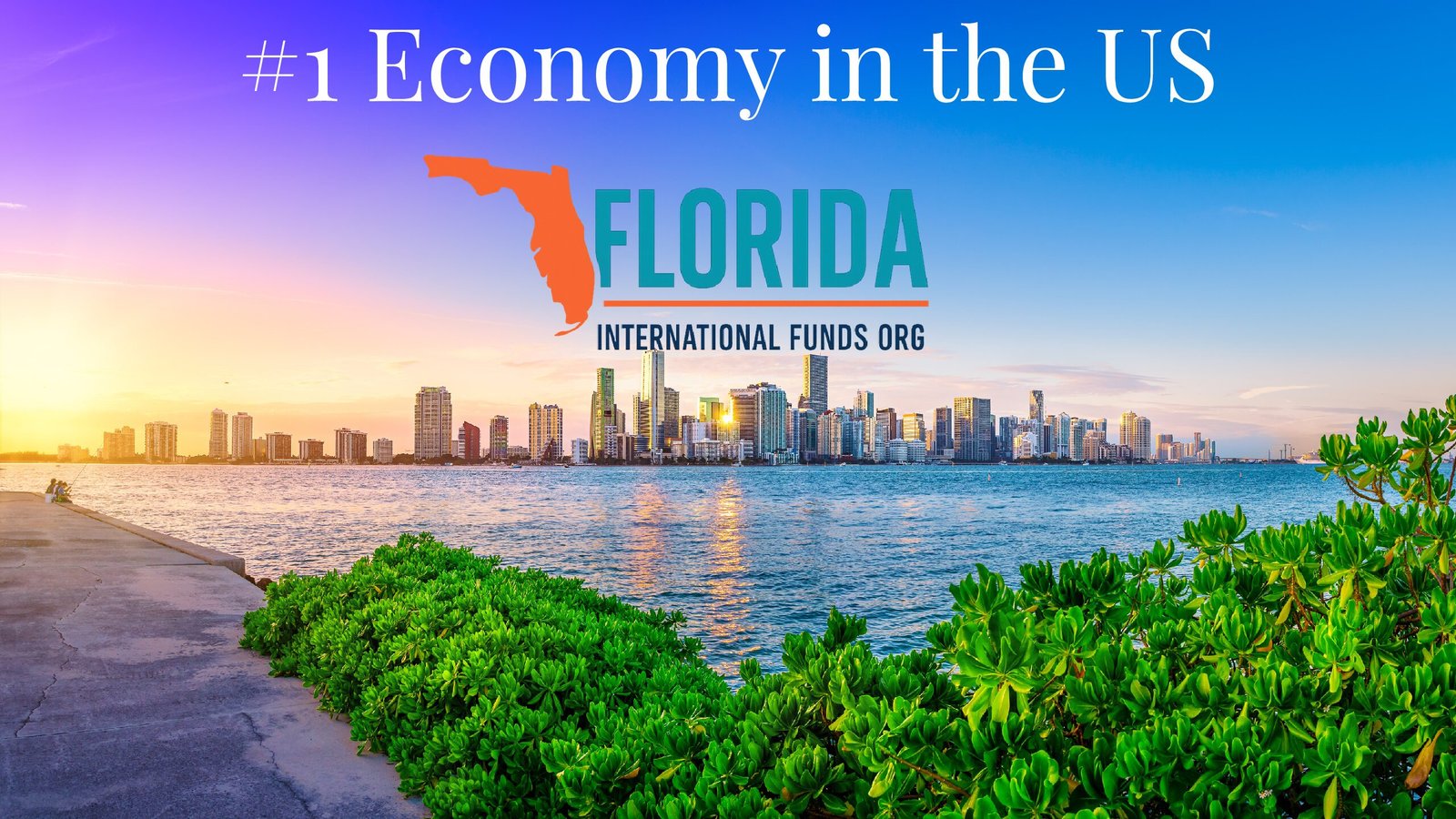
Florida Is Officially the #1 Economy in America — and the Fight Over Who Finances Its Growth Just Turned Hostile
The Rich States, Poor States 2026 ranking confirms what the capital flows have been signaling for three years. But a blunt May 27 admission from KeyBank — that banks are now ‘competing against ourselves’ by lending to private credit funds that then outcompete them for deals — defines the credit market tension that will shape Florida’s next financing cycle.
FLORIDA CAPITAL FLOWS
Florida was formally ranked the #1 state in the United States for economic performance in the Rich States, Poor States 2026 report, published this week by the American Legislative Exchange Council. The ranking — based on 15 equally weighted policy variables including tax burden, regulatory environment, and fiscal health — is the institutional confirmation of a capital formation story that has been building for three years. It arrives in the same week that the Miami–Fort Lauderdale–West Palm Beach mega-region ranked #2 nationally in CBRE’s 2026 Corporate Headquarters Relocation Momentum rankings, behind only Dallas–Fort Worth. Florida’s financial ecosystem is not just attracting capital. It is attracting the operating companies, corporate headquarters, and employer bases that create the UHNW wealth the financial ecosystem then serves.
The corporate HQ relocation data from CBRE is particularly significant for managers building Florida LP and client pipelines. The firms arriving in South Florida are not financial services companies relocating for tax efficiency. They are operating companies — technology, healthcare, logistics, and professional services businesses — whose founders, executives, and option holders are creating new UHNW wealth events in real time. The wealth management opportunity in Florida is not static: it is being continuously replenished by new corporate arrivals producing new liquidity events, new concentrated positions, and new generational wealth transfer needs. For advisory firms and alternative managers building Florida origination capacity, the pipeline of net-new UHNW relationships is structural, not cyclical.
The housing market data published this week by Florida Realtors adds a nuance that institutional observers should track carefully. Chief Economist Dr. Brad O’Connor identified a potential inflection point: single-family homes in Florida spent a median of 44 days from listing to contract in April — identical to April 2019 and April 2025, two years that subsequently diverged sharply in opposite directions. The broad Florida residential market faces a fork. But the divergence that matters for this publication is geographic and price-tier specific: luxury Brickell and Edgewater product is forecast to outperform Florida suburban markets materially in 2026. The UHNW end of the Florida real estate market — the collateral base for securities-backed lending, UHNW credit facilities, and family office balance sheet construction — is on a different trajectory than the headline Florida housing data suggests.
Seaway North, the 10-unit ultra-luxury development at 9165 Collins Avenue in Surfside developed by Nadim Ashi, has approached a $400 million sellout at an average sale price of $38.6 million per unit. The concentration of product at this price point — and its near-complete sellout — is a direct signal about the depth of the UHNW buyer pool now resident in or routinely transacting in South Florida. A market that can absorb $38.6 million average-priced condos at scale is a market with a client base that demands and can sustain the full institutional wealth management, credit, and investment infrastructure that is now being built there.
FL ECONOMIC PERFORMANCE RANK (2026) #1 Rich States, Poor States · ALEC | MIAMI-FTL-WPB HQ RELOCATION RANK #2 CBRE 2026 Corporate HQ Momentum | SEAWAY NORTH AVG SALE PRICE $38.6M Surfside · 10-unit building near sellout | FL MEDIAN DAYS LISTING TO CONTRACT 44 April 2026 — at a directional fork |
RIA & WEALTH MANAGEMENT M&A
The RIA consolidation machine ran at full speed through the final week of May. Bluespring Wealth Partners — the Kestra Financial-owned aggregator — closed its fifth acquisition of 2026 with the purchase of Synthesis Wealth Planning, a $1.1 billion New Jersey RIA whose AUM represents fivefold growth from its founding. Bluespring’s pace — five deals in five months, all at or above the $1 billion mark — is a signal about where the competitive intensity in mid-market RIA M&A has settled: buyers with reliable capital, disciplined integration processes, and the ability to close quickly are winning deals that slower platforms cannot. Florida-based practices in the $500M–$1.5B range are directly in the target profile for platforms like Bluespring, which has been explicit about Southeast expansion as a geographic priority.
The most strategically significant RIA development with direct Florida implications this week is the pending close of Creative Planning’s acquisition of MASECO LLP — the London-based RIA with $5 billion in AUM and 123 employees that specializes in advising US citizens and international families with complex US-UK-offshore financial planning needs. The deal, announced March 26, is expected to close in Q2 2026 — meaning this week’s reporting window is its anticipated completion. The Florida angle: Creative Planning’s MASECO acquisition creates a $700 billion US-headquartered platform with dual capabilities in cross-border and domestic wealth management that directly competes with Corient for the UHNW international client base that Miami specifically concentrates. Corient’s own international expansion (Stonehage Fleming, Stanhope Capital, Bedrock Group) and Creative Planning’s UK and Swiss acquisitions are converging on the same client profile: globally mobile, US-connected UHNW individuals who need integrated wealth management across multiple jurisdictions.
The SEC’s 2026 Examination Priorities — flagging RIA consolidation as a high-risk area for operational strain and supervision lapses — introduce a regulatory headwind that has not meaningfully slowed deal activity but is beginning to shape deal structure. Earn-out provisions are increasingly used to bridge valuation gaps in volatile markets, and asset purchase agreements are now the dominant structure as buyers seek to limit successor liability. For Florida advisory firm principals evaluating liquidity, the structural implication is direct: the deals being done today involve more earn-out exposure and more integration risk transfer to sellers than deals done 18 months ago. The headline multiple has not compressed, but the risk-adjusted value has. Understanding the full economic terms — not just the EBITDA multiple — is the most important analytical work a Florida advisory firm principal can do before entering a process.
The Bluespring deal also points to a dynamic worth tracking in the Florida market specifically: the $1 billion AUM mark is becoming a minimum threshold for platform interest from the most active PE-backed buyers. Florida practices in the $200M–$800M range are still transacting — as the Boca Raton succession deals and smaller consolidations in this series have documented — but they are doing so at lower multiples, with less competitive tension, and with a narrower range of buyer profiles. Florida advisors in that size bracket who want premium outcomes should be actively pursuing organic growth or strategic tuck-in mergers to reach the $1 billion threshold before initiating a sale process.
BANKING / INSURANCE / PRIVATE CREDIT
The most important credit market statement of the week came not from a deal announcement but from a conference room at Bisnow’s New York Investment and Lending Conference on May 27. Alan Isenstadt, Regional Executive at KeyBank Real Estate Capital, offered a frank summary of the position banks now occupy in the private credit ecosystem: ‘We’ve backlevered ourselves essentially by financing some debt funds and causing that margin compression. We’re competing against ourselves on two sides.’ The comment captures a structural reality that is playing out in South Florida’s commercial real estate lending market as directly as anywhere in the US: banks retrenched from CRE lending in 2023 under regulatory pressure, channeled their capital into private credit funds instead, and those private credit funds then used that leverage to outcompete banks for the very deals banks would have wanted to originate. The resulting dynamic — banks as senior lenders to their own competitors — is not easily unwound.
The practical expression of this dynamic in South Florida: debt funds are leading the largest construction loans in Miami and Brickell — Tyko Capital, Apollo Global Management, and S3 Capital are specifically cited in current reporting as the dominant players in large Miami construction financing. Banks have retreated to sub-$100M deals and largely avoided construction lending, according to BDT & MSD Partners Real Estate Credit Opportunities Fund Managing Director Samantha Rotchford. For private credit managers operating in the South Florida market, this is a durable competitive position, not a transitional one. The regulatory constraints that pushed banks out of construction lending have not been materially reversed, and the Fed’s proposed capital rule changes — when implemented — will primarily affect investment-grade corporate credit, not construction and bridge lending where alternative managers have the deepest structural advantage.
The CREFC Miami 2026 conference in January — which set a record 2,440 attendees — surfaced the defining tension in CRE debt markets that has continued through May: record CMBS issuance running in parallel with rising delinquencies. $162 billion in CMBS issuance in 2025 was a record. The early 2026 execution environment has been described as ‘unusually smooth’ by multiple issuers, with large SASB deals that stalled in late 2025 now moving forward. For Florida-focused credit managers, the CMBS channel is becoming a meaningful exit and refinancing route for the bridge and construction loans originated over the past 24 months — a liquidity pathway that significantly improves the risk-adjusted return profile of the strategy.
The Aztec Group — a Florida-based real estate investment and merchant banking firm with four decades in the state — arranged $55.6 million in bridge financing for Arcadia Gardens in Palm Beach Gardens this week, a transaction that illustrates the active middle-market bridge lending environment in South Florida’s secondary markets. Palm Beach Gardens, Boca Raton, and Fort Lauderdale are generating bridge lending deal flow that is below the headline threshold of Brickell supertall transactions but represents the highest-volume segment of Florida’s non-bank lending market.
INSTITUTIONAL & ALLOCATOR MOVES
Florida’s #1 economic performance ranking is not merely a political talking point. It is an institutional allocator signal. Public pension funds, sovereign wealth vehicles, and endowments that evaluate geographic concentration in their private equity, real estate, and credit portfolios are looking at a state that leads the nation in economic performance, ranks second in corporate headquarters relocation momentum, hosts the highest inbound AGI migration in the US, and is producing UHNW wealth creation events at a pace that no other state can match outside of New York and California. The Florida allocation thesis — for both LP capital and asset manager deployment — has graduated from narrative to data.
The Florida State Board of Administration’s ongoing consideration of long/short equity mandates is unresolved but moving. The SBA’s $294 billion in assets, its $2.3 billion in Q4 2025 alternatives commitments, and its existing ILS exposure through Nephila Capital reflect an institution that is methodically expanding its mandate. The timing of the long/short equity consideration — running parallel to a market environment that Evanston Capital Management described in January as ‘strongly favoring active hedge fund managers who can extract value from dispersion and dislocation’ — suggests the investment team sees the current cycle as the right entry point for the strategy. Managers with long/short equity strategies who have not yet begun cultivating the SBA relationship are now behind the development curve.
The Miami-Fort Lauderdale-West Palm Beach mega-region’s #2 ranking in CBRE’s Corporate Headquarters Relocation Momentum study has a specific implication for institutional allocators evaluating private equity vintage exposure in Florida. Corporate relocation creates a multi-year deployment opportunity across growth equity, buyout, and credit: arriving companies need capital for expansion, founder liquidity, and operational scale-up. Florida-focused PE managers — including those in the Brickell and West Palm Beach ecosystem — are positioned to be the first institutional capital relationship for these newly arrived companies. The geographic proximity between PE firm and portfolio company that is now achievable in South Florida is a structural sourcing advantage that managers in New York or Chicago cannot replicate remotely.
Baby boomers accounted for 42% of Florida home buyers in 2026 — the highest of any age group, per NAR’s 2026 Generational Trends Report. The demographic profile of Florida’s wealth concentration is important for managers building client and LP pipelines: the dominant buyer is 58–76 years old, has accumulated significant equity-rich real estate wealth, carries complex estate planning needs, and is at or near the liquidity event horizon for concentrated positions built over multi-decade careers. The intergenerational wealth transfer narrative that has been building in Florida is not a 10-year story. It is a 5-year story for the portion of the boomer cohort that is now at the oldest end of that bracket.
DEAL RADAR
DEAL / MOVE | DETAIL |
Florida ranked #1 US economic performance | Rich States, Poor States 2026 · ALEC · 15-variable ranking · Published week of May 26 · Confirms capital formation thesis with official data |
Miami-FTL-WPB mega-region: #2 HQ relocation | CBRE 2026 Corporate HQ Relocation Momentum · Behind only Dallas-FW · Positions S. FL as top operating company destination nationally |
Bluespring Wealth → Synthesis Wealth Planning | $1.1B AUM · NJ RIA · Bluespring’s 5th deal of 2026 · May 20 · Kestra-owned platform; FL practices in target profile |
Creative Planning + MASECO LLP (pending close) | $5B AUM · 123 employees · London RIA · Cross-border US-UK specialist · Q2 2026 close · Competes with Corient for international UHNW client base |
KeyBank: ‘competing against ourselves’ on CRE credit | May 27 · Bisnow conference · Banks financing private credit funds that then outcompete them · Structural dynamic confirmed at senior level |
Aztec Group arranges $55.6M bridge · Palm Beach Gardens | Arcadia Gardens · FL-based Aztec merchant bank · Illustrates active middle-market bridge lending in S. FL secondary markets |
Seaway North (Surfside) approaches $400M sellout | 10 units · $38.6M avg sale price · Nadim Ashi development · Confirms depth of $30M+ buyer pool in S. FL |
Florida SBA long/short equity mandate — ongoing | $294B pension · Under active consideration · No RFP issued · Evanston Capital cites current cycle as ‘strongly favoring active managers’ · Relationship window open |
SEC 2026 Examination Priorities flag RIA consolidation | High-risk area for operational strain · Shifting deal structures: more earn-outs, asset purchase agreements dominant · Affects terms for FL sellers |
FL housing market at inflection point | Florida Realtors Chief Economist O’Connor · 44 days median listing-to-contract in April · Path bifurcates summer 2026 · Luxury Brickell/Edgewater to outperform suburbs |
3 STRATEGIC INSIGHTS FOR MANAGERS
01 Florida’s #1 Economic Ranking Is the End of the Migration Debate and the Beginning of a Different Question
The Rich States, Poor States #1 ranking for Florida is not a data point that changes anyone’s mind — the capital flows have made the argument empirically for three years. What it does is close the debate for any institutional decision-maker who has been waiting for third-party validation before committing resources to Florida. The relevant question for managers is no longer whether Florida’s economic environment justifies investment in local infrastructure. It is whether the pace of that investment is keeping up with the opportunity. CBRE’s #2 corporate HQ relocation ranking tells the same story from a different angle: South Florida is absorbing operating company headquarters at a rate that is creating new wealth events, new institutional relationships, and new advisory needs faster than most financial services firms have staffed to serve. The managers who sized their Florida operations to the 2022 market are already behind. The managers who size to the 2026 market will be behind by 2028. The correct frame is: what does the 2028 Florida market look like, and what does the infrastructure required to serve it look like today?
02 The Bank-Versus-Private-Credit Dynamic in Florida CRE Is More Durable Than Most Credit Managers Are Pricing In
KeyBank’s Alan Isenstadt did private credit managers a favor by articulating the bank competitive position so bluntly on May 27: banks are financing debt funds with leverage, and those debt funds are using that leverage to outcompete banks for the deals. The Catch-22 Isenstadt described — ‘competing against ourselves on two sides’ — is not a temporary misalignment that will resolve when rates fall or regulations ease. It is a structural consequence of a decade of bank regulatory tightening that has permanently redistributed origination capacity in construction and bridge lending to non-bank players. In South Florida specifically, where the five largest construction loans in Brickell over the past 18 months have all been led by debt funds rather than banks, the non-bank lender position is entrenched. For private credit managers active in the Florida CRE market, the strategic imperative is not to compete harder against banks — it is to establish the origination relationships and deal sourcing infrastructure that prevent banks from recapturing market share when regulatory conditions eventually ease. Those relationships, built today in the developer and broker community, are the durable competitive moat.
03 The Cross-Border Wealth Management Race Between Corient and Creative Planning Is Florida’s Most Consequential Competitive Story — and It Has No Clear Winner Yet
Two of the largest RIA platforms in the US are now explicitly competing for the same client profile: globally mobile, US-connected UHNW individuals with complex multi-jurisdiction financial planning needs. Corient — Miami-headquartered, Mubadala-backed — is acquiring in EMEA and Canada. Creative Planning — Overland Park-based but with significant Florida operations — is acquiring in the UK and Switzerland. The client profile they are both pursuing lives in South Florida: Brazilian families with US permanent residency, Saudi principals with US investment portfolios, European entrepreneurs who relocated post-pandemic. For Florida-based wealth managers and advisory firms serving this client profile, the arrival of two $200–700 billion platforms explicitly competing for international UHNW clients is both a competitive threat and a valuation signal. If Corient and Creative Planning both view this client base as worth building billion-dollar international acquisition programs to access, the independent advisors already serving it in Miami are sitting on genuinely differentiated books of business. The question is not whether to capitalize on that value — it is whether to do so through affiliation, acquisition, or standalone scale.
LinkedIn Post
Florida just got officially ranked the #1 economy in America. The fight over who finances its growth just got very honest.
This week’s FLOW report tracked four signals you shouldn’t miss:
- Florida ranks #1 in the US for economic performance (Rich States, Poor States 2026) and #2 in CBRE’s Corporate HQ Relocation Momentum rankings. The narrative is now the data.
- A KeyBank senior executive said out loud what the market has known quietly: banks are ‘competing against ourselves’ by lending to private credit funds that then outcompete them for deals. In South Florida CRE, debt funds now lead every major construction transaction. That position is structural, not temporary.
- Bluespring Wealth Partners closed its 5th acquisition of 2026. Creative Planning’s $5B UK acquisition (MASECO) is closing this quarter. The $700B+ RIA platforms are now explicitly building for the globally mobile UHNW client that lives in Miami.
- Florida’s housing market hit an inflection point in May — but luxury Brickell and Edgewater are forecast to outperform the broader state materially. The UHNW collateral base and wealth management opportunity are on a different trajectory than the headline numbers.
The capital is here. The infrastructure is building. The question is whether your firm is sized for 2026 Florida — or 2022 Florida.
About this report: This weekly summary highlights major deals, adviser moves, policy developments and market data for Florida’s wealth‑management and insurance sectors. For questions or media inquiries, please contact the author.